

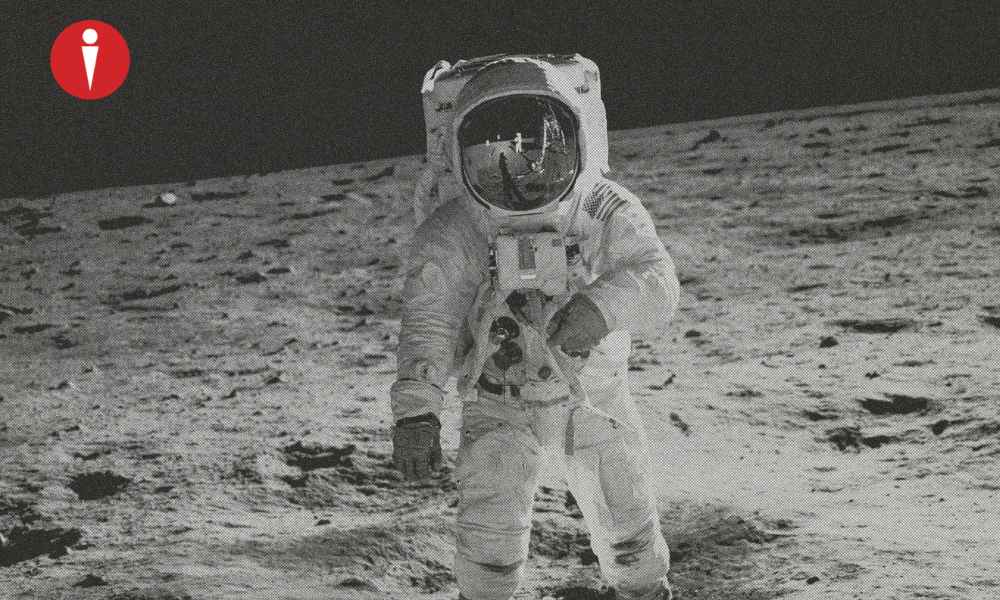
NASA finally announced a comprehensive $20 billion plan to construct a permanent Moon base, changing the course of lunar exploration and human presence beyond Earth at a turning point in space exploration. One of the most significant turning points in NASA’s history, the statement, which was made in March 2026, outlines a progressive path that shifts the agency’s goals from brief visits to long-term habitation, science, and technical advancement.
Establishing a lunar surface outpost by the end of this decade is the goal of this program, a strategic move that highlights NASA’s need to regain leadership in space exploration against escalating global rivalry.
Vision and Approach: A $20 Billion Moon Bet
The goal of NASA’s lunar base plan, which is projected to cost close to $20 billion over the next seven years, is to construct the first permanent surface infrastructure on the Moon. It represents a move away from earlier orbital initiatives like the Lunar Gateway, which has been shelved in favor of direct lunar residential development.
Officials stress that this course will:
Robotic and crewed landings will increase the frequency of lunar missions.
By the early 2030s, support semi-permanent dwelling modules that enable prolonged astronaut stays.
Encourage a long-term commercial and scientific presence on the moon.
The head of NASA has emphasized that the organization must take decisive action to guarantee American space leadership and stop competitors from defining the next era of exploration.
Beyond the Base: Future Missions & Swarm Proposals
Other innovative research projects are coming up while NASA focuses on its Moon base. NASA chooses a bold proposal to swarm, investigating ideas that use coordinated swarms of small probes to investigate far-off cosmic targets in parallel with plans for land infrastructure. Beyond crewed lunar operations, these swarm missions would mark a paradigm leap in deep space exploration.
Such swarm suggestions demonstrate the expanding scope of NASA’s long-term exploration portfolio and its drive for creative, scalable robotic missions, even though specifics are still being worked out.
From Hubble to Horizons: Juggling the Past and the Future
NASA’s lunar ambition develops while decisions regarding its current space assets are being made. Notably, NASA rejected a billionaire’s offer to repair its deteriorating Hubble space observatory. This decision was based on risk evaluations and mission safety considerations. Potential commercial reboost and repair missions were discussed, but NASA decided to handle the telescope’s aging systems internally for the time being instead of pursuing them.
As a reminder of NASA’s illustrious history and the difficulties of maintaining aging orbital equipment, the iconic Hubble Space Telescope, one of the most scientifically productive observatories ever launched, is still in operation with limited gyroscope assistance.
Celebrating 50 Years of Research
NASA honors the enormous journey that has led humanity to this point while simultaneously looking to the future. Through the use of Hasselblad cameras, Moonshots: 50 Years of NASA Space Exploration presents breathtaking images of 50 years of NASA’s legendary accomplishments. This graphic record captures the spirit that drives today’s renewed lunar aspirations, from the first lunar landings of the 1960s to missions on the Space Shuttle and International Space Station.
These historic images, which were mostly taken during early space missions using specially adapted Hasselblad cameras, continue to serve as a tribute to human inventiveness and tenacity, traits that are now incorporated into NASA’s next major advancement.
What the Moon Base’s Future Holds
The Moon base’s tiered plan consists of:
Expanded Moon Missions: In order to prepare for surface colonization, increase the number of robotic and crewed landings.
Infrastructure Build-Out: Install systems and modules that facilitate scientific research and routine astronaut rotations.
Permanent Presence: Create long-term lunar operations to support future Mars exploration projects and international cooperation.
This strategy expands humanity’s reach while establishing the framework for the next stage of interplanetary travel by fusing technological innovation with strategic vision.
Read our Exclusive interview with Renate Schnürch