

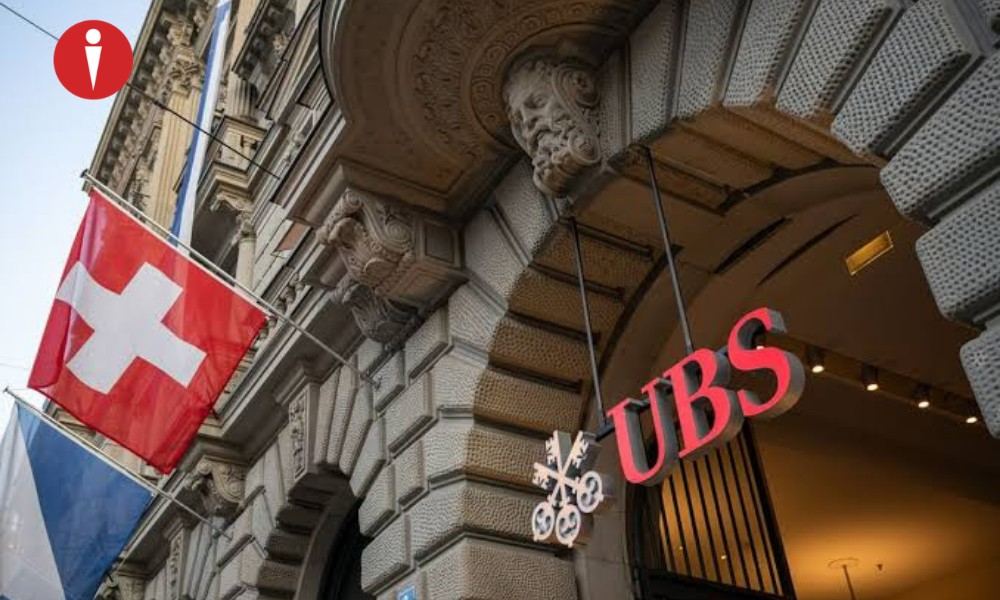
UBS is facing an important regulatory debate in Switzerland as lawmakers consider how much capital the bank should hold to protect its foreign businesses. A Swiss parliamentary committee has backed a compromise that would reduce the amount of Common Equity Tier 1 (CET1) capital UBS must use to support its overseas subsidiaries.
The decision comes after months of disagreement between UBS and Swiss authorities over tougher capital rules introduced following the collapse of Credit Suisse in 2023. The latest proposal could reduce the financial pressure on UBS while still requiring the bank to maintain strong protection against future losses.
What Are UBS Capital Concessions?
UBS capital concessions refer to proposed flexibility in how the bank can meet new capital requirements.
Under the Swiss government’s original proposal, UBS would have been required to fully back its foreign subsidiaries with CET1 capital. CET1 is one of the strongest forms of bank capital because it can absorb losses directly.
The parliamentary committee has instead proposed a 50% CET1 requirement. UBS could cover the remaining 50% using Additional Tier 1 (AT1) capital, which is generally less expensive for the bank.
Why Are Switzerland’s Capital Requirements Changing?
The debate began after UBS took over Credit Suisse following its collapse in 2023.
The emergency takeover created concerns about the size and risk of Switzerland’s largest bank. UBS has a large international business, meaning problems at its foreign subsidiaries could potentially affect the Swiss parent company.
Swiss authorities therefore proposed stronger capital requirements to provide greater protection for the bank and the wider Swiss economy.
The government’s earlier plan would have required UBS to raise roughly $20 billion in additional CET1 capital. UBS has argued that such a large increase could weaken its competitiveness and make it harder to compete with major banks in other financial centers.
What Has the Swiss Parliament Proposed?
The latest compromise would allow UBS to meet half of the requirement through CET1 and the other half through AT1 instruments.
The proposal would give UBS more flexibility without completely removing the additional safeguards requested by regulators.
The committee has also proposed an 11% CET1 trigger. If UBS’s capital ratio falls below that level, certain investor payouts and bonuses could be restricted. The measure is intended to encourage UBS to maintain a strong capital position during financial pressure.
Could UBS Leave Switzerland?
The debate has also raised concerns about Switzerland’s position as a global financial center.
UBS has warned that excessive regulation could make Switzerland less attractive for international banking. The bank has argued that new rules should be proportionate and aligned with international standards.
This has fueled discussion around the phrase “UBS leaves Switzerland,” although there is no confirmed decision by UBS to move its headquarters.
For Switzerland, the challenge is to protect financial stability without making the country’s banking sector less competitive.
What Could the New Rules Mean for UBS?
If the compromise becomes law, UBS could avoid raising the full amount of additional CET1 capital initially sought by the government.
That could help the bank protect returns, maintain financial flexibility and continue investing in its international business.
At the same time, using AT1 capital means UBS would still need to strengthen its overall loss-absorbing capacity. The compromise attempts to balance regulators’ concerns with the bank’s concerns about cost and competitiveness.
What Happens Next?
The committee’s decision is not the final step. The proposed changes still need to go through Switzerland’s parliamentary process, with lawmakers expected to debate and vote on the measures in September.
Swiss Finance Minister Karin Keller-Sutter has expressed disappointment with the softer proposal and raised concerns about its potential impact. The government continues to support stronger capital requirements for UBS.
The final decision could shape Switzerland’s banking rules for years to come.
Looking Ahead
The UBS capital concessions debate is about more than one bank. It reflects a larger question facing Switzerland: how can the country protect financial stability while keeping its banking sector competitive?
The proposed 50% CET1 requirement, combined with AT1 funding for the remaining portion, would give UBS more flexibility than the government’s original plan.
For UBS, the result could affect capital costs, investor returns and its international strategy. For Switzerland, it could determine how the country regulates its largest financial institution after the Credit Suisse crisis.
Read our latest interview with Derek K. Cafferata