

There are moments in life when people need more than an answer they need to see that something they thought was impossible can become possible.
They need a story that reminds them that beyond pain, uncertainty and suffering, there can still be healing. Beyond limitations, there can still be discovery. And beyond what we understand today, there may be possibilities waiting to be explored.
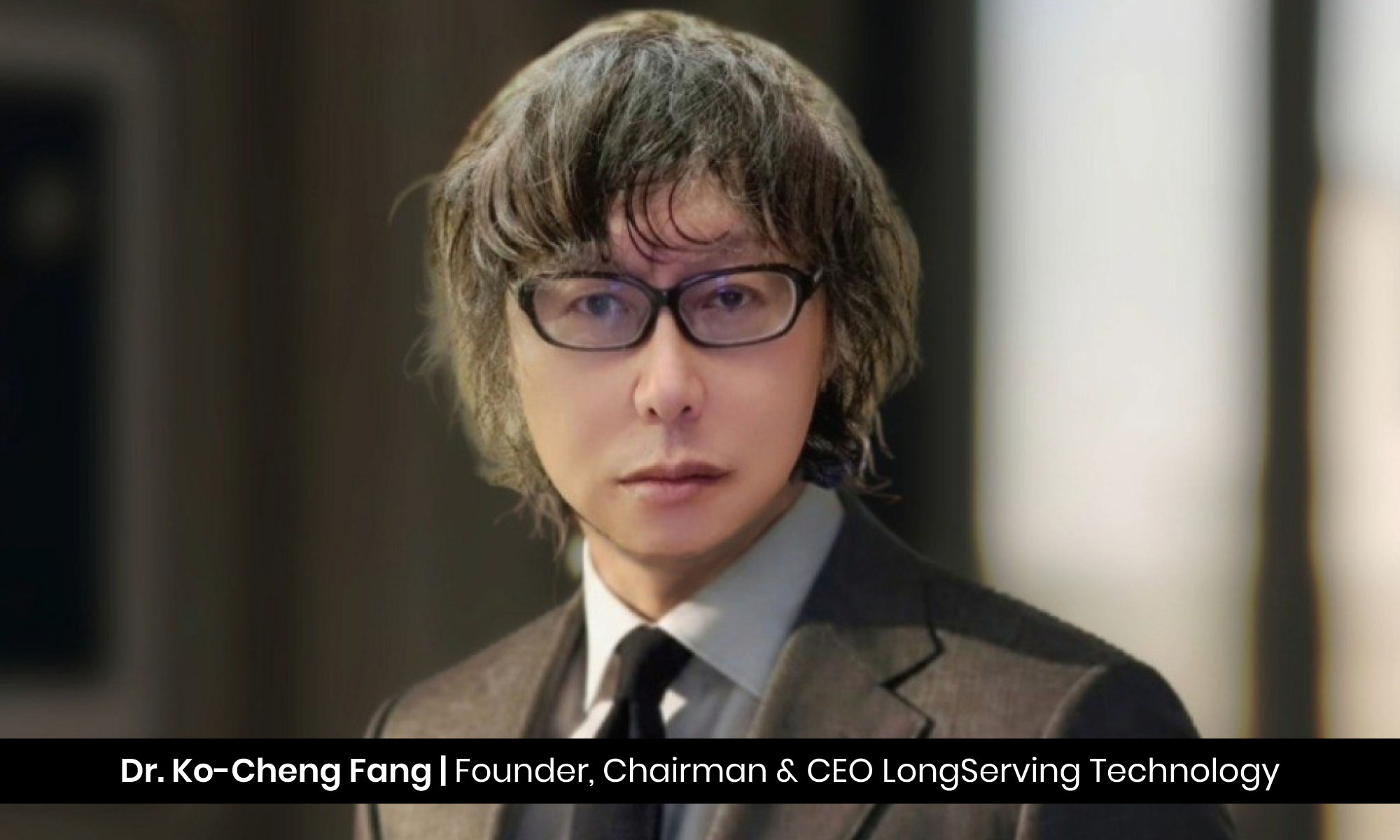
This is the spirit that defines Dr. Ko-Cheng Fang.
For Dr. Fang, innovation has never been simply about creating something new. It is about having the courage to explore what others may initially consider impossible, while carrying a deep sense of responsibility for how science and technology shape the future of humanity.
His journey brings together disciplines and perspectives that rarely meet materials science, technology, artistic creation, and Zen meditation. Through decades of interdisciplinary exploration, he has developed a philosophy in which science helps us understand reality, art expands the boundaries of imagination, and meditation cultivates the clarity to look beyond conventional thinking.
His work is driven by a larger question: How can technology serve life itself?
From exploring advanced materials and unconventional technological possibilities to imagining future solutions for energy, computing, information security, healthy longevity and life-support technologies, Dr. Fang looks beyond what technology can do today and asks what it could mean for generations yet to come.
At the heart of his philosophy is a simple belief: scientific progress should not only make life more efficient; it should make life better, safer and more meaningful.
And perhaps that is why his story matters. Because sometimes, to believe in a better future, we first need to see someone willing to imagine it.
Dr. Fang’s journey is an invitation to look beyond the boundaries we have inherited, to question the impossible, and to believe that discovery begins when we are brave enough to ask, “What if?”.
Rethinking Computing from Electrons to Photons
A defining turning point in Dr. Fang’s journey came when he recognised that traditional electronic chips were approaching fundamental physical limitations.
As semiconductor leaders such as TSMC advanced toward the 1–2 nanometer process era, the industry increasingly confronted challenges including quantum tunnelling, thermal dissipation, power consumption, and power-grid limitations. At the same time, enormous global investments were being directed toward expanding electronic AI computing infrastructure and the energy systems required to support it. Dr. Fang saw these developments as a sign that conventional electronic architectures were approaching their limits.
He began to recognise that while electrons were reaching fundamental constraints in transmission and computation, photons offered a potential pathway toward high-speed, low-energy computing. However, conventional silicon photonics operated at wavelengths of approximately 1310–1550 nanometers, far removed from the nanoscale dimensions required for advanced computing applications. Rather than accepting this limitation, Dr. Fang pursued a more fundamental question: if an existing material could not provide the required wavelength, could an entirely new material be created?
This vision led him to establish LongServing Technology in 2010. His subsequent research and development efforts focused on X-photon material technology, which he describes as having wavelengths in the 2–3 nanometer range, alongside all-optical logic and memory architectures. These developments formed the foundation of his vision for a post-silicon computing era driven by photonic technologies.
Dr. Fang also recognised that the definition of computing performance itself was changing. For decades, the semiconductor industry had largely measured progress through Moore’s Law, process-node sizes, transistor density and clock frequency. However, the rapid growth of large-scale AI models exposed increasingly significant limitations in conventional electronic architectures, including the memory wall, data-transfer bottlenecks, thermal challenges and escalating energy requirements.
In this emerging environment, Dr. Fang sees photonic computing as a fundamental shift in the architecture of computing. Instead of relying primarily on continued transistor scaling and increasingly complex electronic interconnects, photonic architectures aim to leverage the properties of light for high-speed data transmission and processing.
His approach centres on the potential of X-photon materials and all-optical memory architectures to enable information to be processed and stored within the optical domain. This represents a broader shift in how computing performance can be understood — moving beyond simply increasing transistor counts and raw computational power toward improving energy efficiency, data transmission and overall system performance.
For Dr. Fang, the transition from electrons to photons represents more than an incremental technological improvement. It reflects a change in the underlying philosophy of computing: from resource-intensive scaling toward innovations in materials, photonics and architecture that could enable substantially faster processing while significantly reducing energy consumption.
His vision is rooted in the belief that the next major advances in computing will come not simply from making existing electronic systems smaller, but from rethinking the fundamental materials and principles on which computing is built.
Engineering at the Nanoscale, Imagining Beyond the Conventional
For Dr. Fang, the transition from electronic computing to photonic computing represents far more than a technological shift. It reflects a broader philosophy that brings together the rigor of scientific engineering with the imagination of art and the ethical principles of sustainability and human-centered innovation.
A defining turning point in Dr. Fang’s journey came when he recognised that traditional electronic chips were approaching fundamental physical limitations. As semiconductor leaders such as TSMC advanced toward the 1–2 nanometer process era, the industry increasingly confronted challenges including quantum tunnelling, thermal dissipation, power consumption, and power-grid limitations. At the same time, enormous global investments were being directed toward expanding electronic AI computing infrastructure and the energy systems required to support it. Dr. Fang saw these developments as evidence that conventional electronic architectures were approaching their physical and practical limits.
Rather than viewing these limitations solely as engineering obstacles, Dr. Fang began asking a more fundamental question: if electrons were approaching their limits in transmission and computation, could photons provide an entirely different pathway? Conventional silicon photonics typically operates at wavelengths of approximately 1310–1550 nanometers. Dr. Fang therefore pursued the possibility of developing fundamentally different materials capable of operating at much smaller scales. This line of thinking eventually led him toward what he describes as X-photon materials, with wavelengths in the 2–3 nanometer range.
This vision led Dr. Fang to establish LongServing Technology in 2010. His subsequent research and development focused on X-photon material technology, all-optical logic, and photonic memory architectures. Together, these developments form the foundation of his vision for a post-silicon computing era driven by photonic technologies.
In Dr. Fang’s philosophy, extreme nanoscale engineering and artistic thinking are not contradictory. Instead, they represent two complementary dimensions of innovation: scientific rigor provides the precision required to engineer matter and computation at the nanoscale, while art and the humanities provide the imagination and ethical framework needed to determine why and toward what purpose such technologies should be developed.
At the technological level, this philosophy is reflected in his work on X-photon materials, all-optical three-dimensional architectures, and photonic memory. He describes these systems as enabling optical paths to refract by 90 degrees and requiring highly precise control of material properties and microscopic structures. The objective is not simply to make existing electronic systems smaller, but to rethink how information can be transmitted, processed, and stored.
Dr. Fang also views the environmental implications of computing as an important motivation for this transition. The rapid expansion of electronic AI computing has intensified concerns surrounding energy consumption, thermal management, power infrastructure, and resource use. His vision for photonic computing is therefore connected to the possibility of achieving substantially greater computational performance while reducing energy requirements. In this sense, technology is viewed not merely as a pursuit of computational power, but as a means of addressing broader sustainability challenges.
For Dr. Fang, art provides the courage to challenge established frameworks and the imaginative perspective to envision alternatives. Nanoscale engineering provides the tools to translate those ideas into physical systems, while environmental and humanistic considerations provide a framework for directing technological development toward human needs and sustainability.
This perspective also informs his view of the established semiconductor industry. Traditional large-scale semiconductor companies have invested enormous amounts of capital, equipment, expertise, and supply-chain infrastructure into existing electronic architectures. Consequently, when technological bottlenecks emerge, much of the industry’s development naturally continues along established technological pathways. Moore’s Law has historically encouraged continual reductions in component size and improvements in chip performance, but increasingly difficult physical challenges including thermal dissipation, power consumption, and quantum effects have created new constraints.
Dr. Fang’s approach through LongServing Technology has been different from the outset. Rather than focusing exclusively on improving existing electronic chips, he pursued an independent and interdisciplinary research philosophy built around a fundamental question: if traditional electronic architectures are approaching their limits, can computing be reconsidered from the level of fundamental materials and computational principles?
This question lies at the centre of the disruptive innovation that Dr. Fang seeks to pursue.
His research brings together materials science, optical physics, chip architecture, engineering, artistic imagination, and interdisciplinary innovation. While established semiconductor development continues to rely heavily on technologies such as extreme ultraviolet (EUV) lithography to push silicon-based architectures toward increasingly small process nodes, Dr. Fang has chosen to investigate an alternative direction based on X-photon materials and three-dimensional all-optical computing architectures.
His approach seeks to move beyond the boundaries of conventional silicon-based architectures by beginning with photons, materials, and optical computation. The broader objective is to address challenges associated with thermal limitations, data-transfer bottlenecks, and the memory wall through a fundamentally different computing architecture.
The motivation for this shift is particularly significant in the era of large-scale artificial intelligence. For decades, computing progress was largely measured through Moore’s Law, transistor density, process-node scaling, and clock frequency. However, the growth of increasingly large AI models has highlighted additional limitations in conventional electronic architectures, including memory bandwidth, data movement, thermal management, and escalating energy requirements.
Dr. Fang therefore views photonic computing as a fundamental change in the architecture of computation rather than simply another stage of semiconductor miniaturisation. Instead of depending primarily on continued transistor scaling and increasingly complex electronic interconnects, photonic architectures seek to exploit the properties of light for high-speed data transmission and processing.
At the centre of this vision are X-photon materials and all-optical memory architectures, which Dr. Fang believes could enable information to be processed and stored within the optical domain. This represents a broader redefinition of computing performance—one that looks beyond transistor counts and raw computational power toward energy efficiency, data transmission, processing speed, and overall system performance.
One of the most unconventional and personally significant projects in Dr. Fang’s research journey has been his work on what he describes as an “anti-gravity device,” including flying hoverboards and levitating metal.
The project became particularly significant because it challenged conventional assumptions about the possibilities of levitation and anti-gravity technology. According to Dr. Fang, when he initially pursued the research, the concept was regarded by external observers and AI systems as inconsistent with established scientific understanding and impossible to achieve.
Rather than allowing existing theoretical frameworks to define the endpoint of exploration, Dr. Fang chose to investigate the question through an interdisciplinary approach. He combined insights derived from Zen meditation with materials-engineering research, focusing on the properties of levitating metals and the potential mechanisms underlying anti-gravity devices.
After years of research and development, Dr. Fang states that he has identified a direction for producing levitating metal and has continued advancing the development of anti-gravity flying hoverboards. For him, the significance of this work extends beyond the device itself. It represents an exploration of the boundaries of current human understanding and a willingness to investigate questions that initially appear to fall outside conventional scientific frameworks.
This philosophy is consistent with his broader approach to innovation. Dr. Fang believes that transformative innovation does not necessarily begin with universal acceptance. In his view, some breakthroughs begin as questions that existing frameworks cannot yet adequately answer.
The transition from electronic computing to photonic computing therefore represents, in Dr. Fang’s vision, a convergence of materials science, optical physics, engineering, artistic imagination, environmental responsibility, and interdisciplinary exploration. His objective is not simply to develop faster chips, but to reconsider the fundamental materials, architectures, and principles underlying computation.
The work remains ongoing. Dr. Fang intends to continue developing these technologies and to demonstrate his research vision through tangible technological results.
His broader ambition is to contribute to a new direction for computing in the post-silicon era—one in which scientific precision, technological innovation, artistic imagination, and human-centred sustainability are brought together in the pursuit of fundamentally different possibilities.
Insights from Meditation and Intuitive Prediction Beyond Logic
Through many years of meditation, Dr. Fang has developed the ability to enter a state of profound mental calm, allowing him to combine rigorous logical reasoning with intuitive perception. In this state, he is able to mentally visualize potential photon pathways within photonic materials and logic gates, as well as the possible operating principles of an entire system, even before an experiment begins.
He first constructs a conceptual model in his mind and then uses experimentation to test and validate it. This approach allows him to anticipate possible experimental outcomes, refine research directions at an early stage, and potentially shorten the time required for research and development.
Artistic Practice and Interdisciplinary Free Thinking
Dr. Fang’s artistic background spans traditional Chinese meticulous painting, watercolor, sculpture, and mold making. Years of artistic practice have developed his intuitive understanding of lines, spatial relationships, proportion, structure, and aesthetics.
For Dr. Fang, artistic creation is not completely constrained by the established boundaries of academic disciplines. This perspective has enabled him to approach technological challenges without being easily restricted by conventional assumptions that something is “impossible” or “cannot be done.” He views the propagation of light through space not only as a physical phenomenon, but also as something that can be designed, arranged, structured, and shaped in ways comparable to an artistic creation.
Breaking Through the “Barrier of Existing Knowledge”
Throughout his research career, Dr. Fang has sought to avoid being completely constrained by established frameworks in electronics and conventional silicon photonics. Instead, he has explored ways to integrate materials engineering with a deeper understanding of optical space.
When confronted with problems for which no established theory provides a direct solution, he approaches them by reconsidering the relationships among materials, photon behavior, and spatial structures rather than immediately accepting that a particular solution is impossible.
This interdisciplinary approach has contributed to his exploration of new technological pathways, including research directions involving photon wavelength control and photonic memory.
For Dr. Fang, science is a means of verifying reality, art provides the freedom to extend the boundaries of imagination, and Zen meditation helps maintain clarity, concentration, and perspective. He regards the combination of these three disciplines as a defining element of his approach to unknown technological challenges.
Dr. Fang hopes that LongServing Technology will be recognized globally as an important driving force and innovation platform for addressing bottlenecks in traditional computing and advancing the development of all-photonic AI.
A Legacy Beyond Patents and Products
When considering his professional legacy, Dr. Fang does not view patents and products as the ultimate measure of his contribution. More importantly, he hopes to leave behind a spirit of intellectual courage the willingness to challenge conventional scientific frameworks and explore unknown possibilities across disciplinary boundaries.
Through the development of 2nm X-Photon materials, photonic CPUs, and photonic memory, he aims to contribute to substantially increasing human computing capabilities while reducing the energy required for computation. His broader objective is to address the growing demands for computing power and energy efficiency in the AI era.
For Dr. Fang, the value of technology extends beyond creating faster chips or more powerful computing systems. He believes its deeper significance lies in whether technological progress can contribute meaningfully to the development of human civilization.
This philosophy continues to inspire his efforts to integrate technology with art and explore new possibilities at the intersection of science, materials engineering, optics, and human creativity. Through his research, he hopes to demonstrate that deep technology can not only transform industries and infrastructure, but also contribute to the sustainable advancement of society.
Mentoring the Next Generation of Researchers
When mentoring young engineers, physicists, and researchers entering the laboratory, Dr. Fang emphasizes the importance of maintaining a long-term vision and preserving the capacity for imagination.
His message to emerging researchers is to have the courage to challenge established frameworks and never allow existing disciplines or theories to unnecessarily limit their exploration of what may be possible.
At the same time, Dr. Fang believes that technological ambition must be accompanied by ethical responsibility. Researchers, in his view, must recognize not only the opportunities created by deep technology but also its potential impact on society and the future of humanity.
He encourages the next generation of researchers to uphold three core principles:
Research and Development Should Be Grounded in Human Well-Being
Dr. Fang believes that meaningful technological breakthroughs should not be driven solely by academic achievement or short-term commercial interests. Instead, research should address significant challenges facing humanity, including computing-power limitations, energy consumption, and information security.
He advocates developing technologies that can contribute to a more sustainable, secure, and improved living environment for future generations.
Uphold Social Responsibility and Technological Justice
Dr. Fang believes scientists and technology leaders must recognize that emerging technologies can have far-reaching effects on industries, economies, and society.
As disruptive innovations are developed, he emphasizes the importance of collaboration and shared responsibility in helping traditional industries navigate technological transformation. He also advocates avoiding unnecessary resource consumption and unproductive competition, while encouraging technological progress that can generate broader benefits for humanity.
Lead by Example and Demonstrate Integrity
For Dr. Fang, scientific excellence involves more than technical expertise. He believes researchers should maintain a strong sense of responsibility toward people and the wider world while pursuing knowledge and technological advancement.
Through dedication to exploring the unknown, commitment to discovering and verifying truth, and perseverance in overcoming difficult challenges, scientists can demonstrate integrity, responsibility, and a sense of justice.
Dr. Fang believes that researchers have the opportunity to guide technological development toward a more responsible and humane direction—one in which scientific innovation serves not only technological progress, but also the long-term well-being of humanity.
Transparent Evidence and Third-Party Verification
Dr. Fang believes that regardless of how the outside world questions emerging technologies or how existing theories define what is possible, rigorous science must ultimately withstand scrutiny through evidence.
To support this principle, LongServing Technology conducts testing and photographic documentation through authoritative third-party laboratories, including verification of the wavelength and structural characteristics of X-Photon materials. Dr. Fang also personally participates in building prototypes and photomasks, emphasizing actual operational results, experimental data, and reproducible evidence as the strongest foundations for technological credibility and trust.
Comprehensive Intellectual Property and Confidentiality Protection
From the early stages of research and development, Dr. Fang emphasizes the importance of simultaneously establishing a global patent strategy and rigorous confidentiality-management systems.
Non-disclosure agreements and structured intellectual-property protection are intended not only to reduce the risks of imitation and information leakage, but also to protect the integrity of technological development and establish clear legal boundaries around proprietary research and innovation.
Strategic Risk Balancing and Trustworthy Collaboration Through Shared Value
Dr. Fang views trust as being built through shared interests, mutual responsibility, and a long-term commitment to creating value.
Under this philosophy, LongServing Technology has explored strategic equity and risk-sharing arrangements intended to transform historical challenges into opportunities for collaboration. Dr. Fang also seeks to support the transformation of traditional semiconductor supply chains, with the goal of establishing deeper and more sustainable relationships with partners around a shared technological vision.
The Meaning of Hard Work and Technological Purpose
After years of entrepreneurship, research, development, and cross-disciplinary exploration, Dr. Fang has developed a deeper understanding of what it means to devote one’s life to meaningful work.
He believes that the value of hard work ultimately lies in addressing challenges that matter to humanity. In his view, success should not be measured solely by the number of patents obtained or financial results achieved, but also by whether technological innovation can help address computing bottlenecks, reduce energy consumption, strengthen information security, improve people’s lives, and contribute to a better future for the next generation.
For Dr. Fang, the challenges and passion experienced throughout the journey can be as meaningful as the final results or external recognition. He regards the highest form of work as bringing genuine passion into research and creation—embracing difficult problems, exploring the unknown, and experiencing the satisfaction of discovery and breakthrough rather than simply pursuing applause or fame.
Most importantly, Dr. Fang seeks to demonstrate his values through the way he lives and works. For him, hard work is not simply a means of fulfilling personal ambitions; it also represents a responsibility toward society and the people who work alongside him. Even in the face of doubt, setbacks, and uncertainty, he emphasizes remaining committed to one’s convictions, moving forward with courage, and continuously pursuing excellence with perseverance.
From Scientific Vision to Physical Technology
As LongServing Technology works to transform its forward-looking technological vision into practical applications, Dr. Fang has remained deeply involved in the company’s technological direction and research and development efforts.
His involvement extends across multiple layers of the technology-development process, including materials science, algorithms, system architecture, hardware, and manufacturing processes. Rather than limiting his role to a single discipline, Dr. Fang has worked closely with his team to investigate the boundaries of existing technologies and translate theoretical concepts into experimental systems and physical components.
In materials development, Dr. Fang has led research and testing involving 2nm X-Photon photonic materials and insulating ceramic substrates. Through extensive experimentation, the team has investigated their chemical and physical properties while pursuing the development of novel photonic materials with an average wavelength in the 2–3 nanometer range.
In algorithms and system architecture, Dr. Fang has approached the challenge of photonic-chip design from a perspective that differs from conventional electronic computing architectures. In response to what he describes as the limited availability of suitable design approaches for his targeted photonic architectures, he has led work on all-optical logic computing and Photonic Memory architectures.
In hardware and manufacturing, Dr. Fang has also been directly involved in the modification of low-cost X-ray equipment, the development of 7nm photomasks, and the design of 90-degree vertical-refraction optoelectronic conversion platforms. Through this hands-on approach, he has sought to guide the transition from theoretical concepts to physical components, experimental prototypes, and manufacturing capabilities.
Through this combination of technical leadership and direct involvement in experimentation, Dr. Fang and his team have progressively worked to translate their technological concepts into patents, hardware prototypes, and an integrated technology platform, providing the foundation for LongServing Technology’s future technological development and global expansion.
The Meaning of “Light”
If Dr. Fang could embed one message in the heart of every user of an AI system or photonic chip, it would be that “light” is not merely a carrier of computing power and speed. To him, it represents humanity’s aspiration toward a better life and a brighter future.
Dr. Fang believes the purpose behind the light that drives intelligent systems can be understood in two fundamental ways.
First, technology should ultimately serve humanity’s most significant challenges. The development of photonic chips and photonic quantum computing is, in his vision, connected to the need to overcome limitations associated with traditional electronic architectures, particularly in areas such as computing speed and energy efficiency. He also sees photonic technologies as part of the broader effort to address the substantial power, thermal-management, and infrastructure challenges associated with increasingly large-scale computing systems.
Second, technology should go beyond computation and carry wisdom, responsibility, and human values.
For Dr. Fang, every beam of light traveling through a photonic chip symbolizes the courage and persistence of researchers and engineers who challenge conventional thinking, pursue evidence, and explore the unknown. As AI systems increasingly use advanced computing architectures to process enormous quantities of information, he believes their ultimate purpose should remain connected to improving the quality of human life and supporting the sustainable development of civilization.
In this vision, light becomes more than a physical medium for computation. It becomes a symbol of technological aspiration—a reminder that the ultimate measure of innovation lies not only in how fast technology can compute, but also in how responsibly that capability is used and what kind of future it helps humanity create.
A Future at the Intersection of Art, Wellness, Nature and Technology
When Dr. Fang’s journey in hardware innovation reaches its peak, he envisions dedicating himself more fully to cultivating brand aesthetics and creating a distinctive wellness destination that brings together his passions for art and design, meditation and wellness, and the exploration of nature.
One of his long-term aspirations is to acquire and personally operate a hotel and transform it into a unique wellness resort shaped by his artistic vision. He imagines an environment in which architecture, landscape design, gardens, and corridor lighting are thoughtfully integrated to create a distinctive aesthetic experience.
More importantly, Dr. Fang hopes to create a place where people can slow down, reconnect with nature, and rediscover a sense of inner peace. He envisions sharing meditation, wellness practices, and painting with visitors as part of an experience designed to encourage greater balance and harmony among the body, mind, and spirit.
His vision for the future also extends to the intersection of advanced technology, health, and longevity. Dr. Fang is interested in exploring the potential of life-support technologies and DNA-related technologies in areas such as healthy aging and longevity. His broader aspiration is for technology to move beyond improving efficiency and computing capability and contribute more directly to the quality and experience of human life.
Looking further ahead, Dr. Fang is fascinated by the possibility that emerging concepts such as flying-board and anti-gravity technologies could eventually become practical realities. If such technologies mature, he envisions establishing transportation hubs at scenic destinations around the world, creating new ways for people to experience landscapes such as Yellowstone National Park, the Alps, and the Himalayas.
At the heart of this vision is Dr. Fang’s belief that human beings should have greater freedom to explore the world, experience nature, and rediscover the sense of wonder associated with movement and flight.
In the next chapter of his life, he hopes to bring together art, meditation, wellness, nature, and advanced transportation technologies. His long-term vision is to help people move beyond the congestion and pressures of modern urban life and reconnect with the freedom, beauty, and joy that can be found in nature and human experience.
The Foundations of an Innovation Journey
Long before his work in advanced hardware and photonic technologies, Dr. Fang’s career began with a strong focus on cybersecurity, cloud-storage architecture, and digital access control, at a time when smartphones had not yet become part of everyday life.
The early stage of his career was shaped by several key motivations and technological challenges.
Balancing Security and Convenience
As digitalization and network connectivity expanded, Dr. Fang became interested in the fundamental tension between information security and user convenience. He sought to develop approaches that could protect increasingly valuable digital information while allowing users to access and manage it more conveniently.
Innovation Before the Smartphone Era
At a time when mobile phones were largely limited to basic communication functions and pagers remained common, computers and digital systems faced significant security vulnerabilities, including attacks involving physical storage media.
Against this technological backdrop, Dr. Fang explored ways of managing digital identities and data remotely. His early work focused on creating mechanisms that could provide users with greater control over their information while reducing the risks associated with compromised systems.
Foundations of Cloud and Security Architecture
Among his early innovations was a mechanism designed to transmit databases to secure remote virtual servers, enabling information to be restored remotely if a local system was compromised.
Combined with smart password-lock mechanisms for access authentication, this approach reflected Dr. Fang’s early interest in connecting remote data storage, digital identity management, authentication, and system recovery. These concepts anticipated several principles that would later become increasingly important in cloud storage and mobile security.
Global Patenting and Security-Related Work
Dr. Fang subsequently secured international patents in the United States, Japan, Taiwan, and India, with some of these patents being held for approximately two decades.
His early work in cybersecurity also brought him into contact with U.S. Department of Homeland Security personnel, with whom he participated in confidential consultations concerning security protocols, according to accounts of his career.
These early experiences established themes that would continue throughout Dr. Fang’s subsequent career: protecting information, developing technologies ahead of their time, challenging conventional approaches, and seeking solutions at the intersection of different disciplines.
From cybersecurity and cloud architecture to photonic computing, materials science, and hardware innovation—and ultimately toward art, wellness, nature, and emerging technologies Dr. Fang’s career reflects a continuing interest in using technology not simply as an instrument of technical progress, but as a means of expanding the possibilities of human life and experience.