

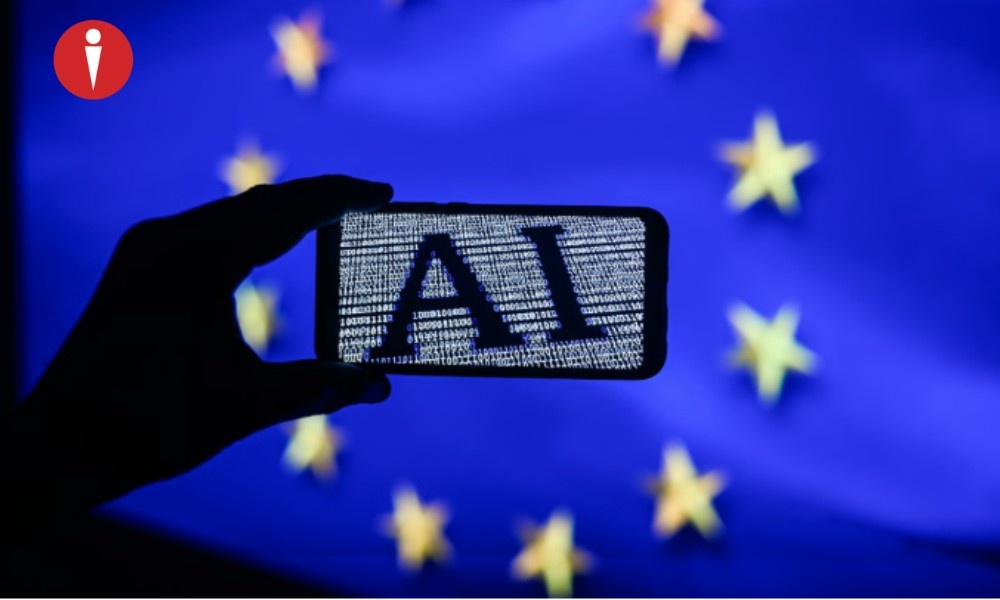
With politicians reaching a temporary agreement on the emerging AI Act, the European Union has taken yet another significant step in influencing global technology policy. This accord, which was reached following months of political unrest, coincides with discussions that Europe is relaxing its historic privacy and artificial intelligence regulations in order to relieve pressure on innovation and address critics who fear the EU may be “caving to Big Tech.”
The AI Act continues to be one of the most ambitious attempts to regulate artificial intelligence despite ongoing delays, political disputes, and business opposition. However, there are still worries that the legislation might be relaxed, diluted, or even postponed for up to a year, according to multiple sources.
A Turning Point Compromise
A revamped, more adaptable framework has been agreed upon by lawmakers from the European Commission and the European Parliament. In order to avoid over-regulation, the new accord loosens some of the severe supervision requirements for high-risk AI models that were part of the original AI Act.
Important Highlights
- a simplified definition of AI systems that pose a high risk.
- lower compliance costs for businesses creating general-purpose AI models.
- modified regulations in response to discussions about the viability and postponement of the AI Act.
- Strong foundation models still have transparency requirements, but the reporting procedures are more straightforward.
Supporters contend that the compromise enhances clarity and avoids obstacles to innovation, despite criticism that the EU failed in its attempt to govern AI.
Why Europe Is Reducing Its Historic AI Regulations
The change in tone indicates that Europe is reacting to international competition, especially from the United States and China, where AI development is proceeding at a breakneck pace.
Motives for Softer Regulations
- Industry pressure: Tech firms said that previous iterations of the AI Act added expensive levels of compliance.
- Political tensions: A number of member states were concerned that the law would discourage competition.
- Market urgency: Europe does not want to lag behind in the development of fundamental AI.
The compromise recognizes that excessive regulation may drive AI innovation outside of the continent, but it also places a high priority on safety, consumer protection, and transparency.
Issues with Implementation and Delays
Despite the breakthrough, final talks and the difficulties of national implementation could cause the AI Act to be delayed by a year. Easing AI privacy regulations, according to some privacy activists, might undermine the EU’s position as a global leader in digital rights.
- Fundamental Problems Postponing the AI Act
- disagreement over the classification of foundation models.
- discussions about monitoring in public areas and biometric surveillance.
- worries about inadequate enforcement procedures.
Nevertheless, following months of political impasse, the deal provides momentum.
The Impact of the Compromise on Companies and Customers
While preserving safeguards to protect individuals and stop dangerous AI usage, the updated legislation offers developers clearer pathways.
Consequences
- For businesses: simpler compliance deadlines, less reporting requirements, and more predictable regulations.
- For consumers: Protective measures against algorithmic discrimination and stricter transparency standards for information produced by AI.
- A framework that is flexible and adaptable to new technologies for government regulators.
The EU hopes to lead with a regulatory framework that encourages both innovation and accountability by taking a more balanced stance.
The EU’s Quest for Ethical AI Leadership
The EU’s commitment to developing a fair, forward-thinking approach to AI governance is demonstrated by its interim compromise on the AI Act. Others see the agreement as an essential step to maintain technical competition, while some detractors contend that Europe is relaxing regulations excessively. In the end, the updated framework puts the EU in a position to promote responsible AI, safeguard citizens, and guarantee that businesses may innovate without encountering undue obstacles. The bloc’s ability to control rapidly advancing technologies without impeding progress will be put to the test during implementation.
Read our Latest interview with Renate Schnürch