

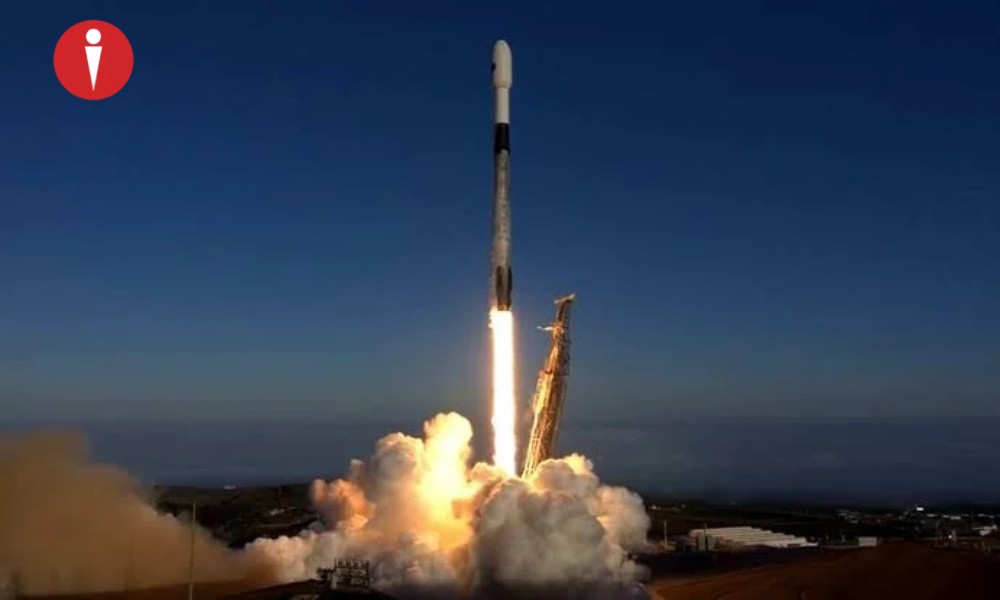
SpaceX has successfully launched a classified mission for the U.S. Space Force from California, adding another flight to its growing list of national security launches. A Falcon 9 rocket lifted off from Vandenberg Space Force Base on November 20, 2026, carrying an undisclosed payload into space. The mission, known as USSF-317, highlights the growing role of commercial space companies in supporting government and defense operations.
The launch took place at approximately 8:20 p.m. local time from Space Launch Complex 4 East. Although the rocket’s flight was publicly broadcast, details about the satellites and their intended activities remain classified.
Falcon 9 Successfully Completes the USSF-317 Launch
The Falcon 9 rocket carried the USSF-317 payload for the U.S. Space Force. After the rocket separated its stages, the first-stage booster returned safely to Earth and landed on SpaceX’s drone ship, Of Course I Still Love You, positioned in the Pacific Ocean.
The landing took place a little over eight minutes after liftoff. This was the 11th flight for the booster, identified as B1100. It had previously supported other government and commercial launches, including a national security mission and several Starlink flights.
According to Spaceflight Now, SpaceX ended its webcast after the booster landing, leaving the upper-stage flight and payload deployment outside the public broadcast.
What Is the USSF-317 Mission?
USSF-317 is a national security space mission carried out for the United States Space Force. Its specific payload, destination and operational purpose have not been publicly disclosed.
The mission is part of a wider series of launches supporting U.S. government space activities. Earlier missions in this sequence include USSF-366, USSF-153, USSF-385, USSF-432 and USSF-627.
Some space observers have suggested that these missions may involve satellites connected to the Space Force’s Space Based Sensing and Targeting programme. However, the government has not publicly confirmed the exact payload or purpose of USSF-317.
Why Are Classified Space Missions Important?
Government satellites support several important activities, including secure communications, space monitoring, navigation and national security operations. Classified missions allow agencies to deploy sensitive technology without revealing details that could affect their operations.
SpaceX’s Falcon 9 provides the U.S. government with access to orbit through a reusable rocket system. Its ability to launch, land and fly again has become an important part of the company’s launch operations.
These missions also demonstrate how commercial space companies are contributing to government infrastructure and national security programmes.
SpaceX Launch Tracker and Live Coverage
People following a SpaceX launch today live can use the company’s official launch website and established spaceflight tracking platforms for mission updates.
For USSF-317, the launch has already taken place. SpaceX’s official mission page and spaceflight news services provide information about the launch, rocket recovery and mission timeline. However, classified payload details are not available through public tracking services.
Frequently Asked Questions
1. When did SpaceX launch the USSF-317 mission?
SpaceX launched USSF-317 on November 20, 2026, at approximately 8:20 p.m. California local time.
2. Where did the SpaceX launch take place?
The Falcon 9 rocket launched from Space Launch Complex 4 East at Vandenberg Space Force Base in California.
3. What was the rocket carrying?
The rocket carried a classified payload for the U.S. Space Force. The exact number, type and purpose of the satellites have not been publicly confirmed.
4. Did the Falcon 9 booster land successfully?
Yes. Its first-stage booster landed on SpaceX’s drone ship, Of Course I Still Love You, in the Pacific Ocean.
5. Where can people follow SpaceX launches?
SpaceX’s official website and established spaceflight tracking platforms provide launch schedules, webcast information and mission updates.
Another Step in America’s Space Operations
The successful USSF-317 launch reflects the continued partnership between SpaceX and the U.S. Space Force. While the mission’s classified nature limits what the public can learn about its payload, the flight demonstrates the importance of reliable launch services for government space operations. As national security programmes expand their presence in orbit, commercial launch providers are expected to remain an important part of the changing space industry.
Read our latest interview with Quentin Bargate