

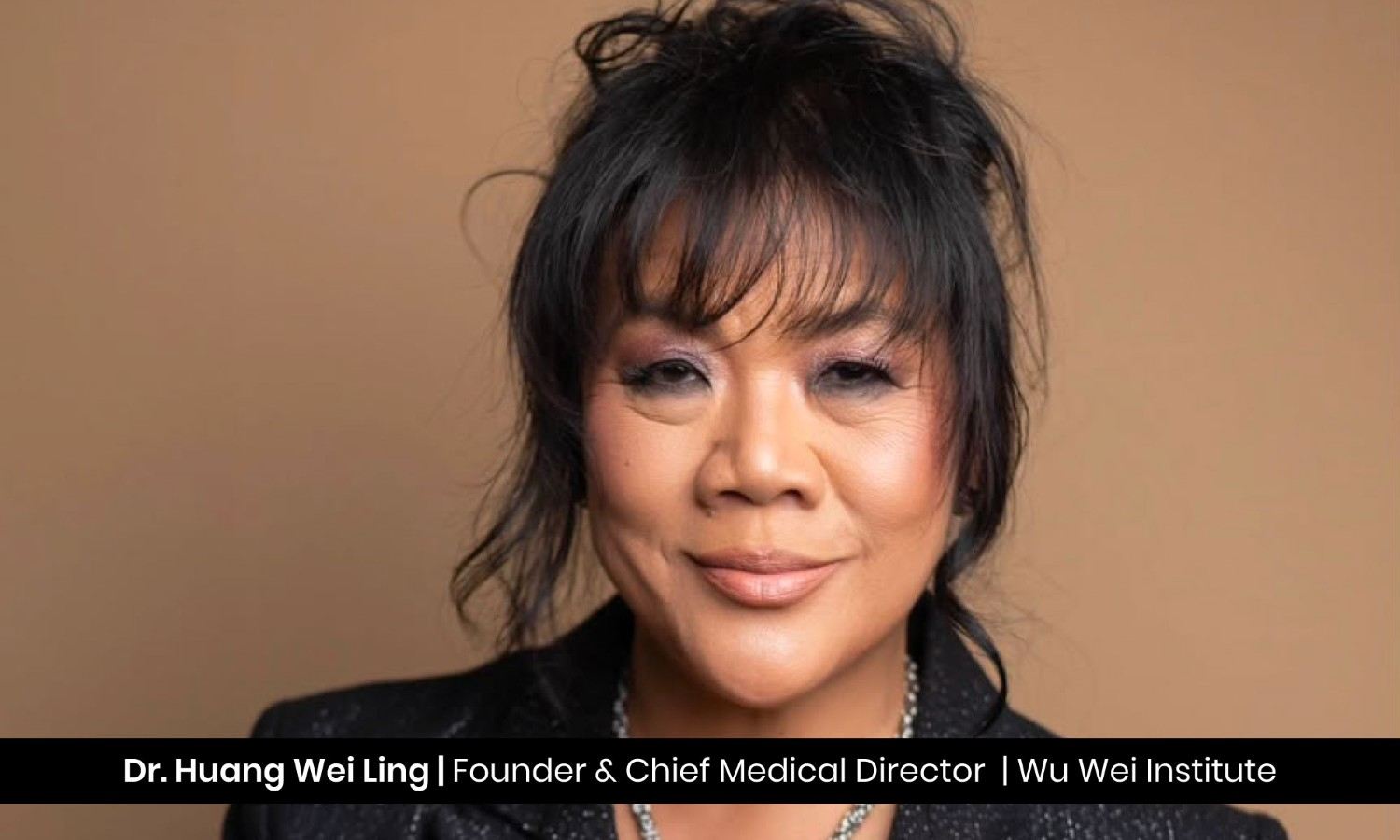
When Dr. Huang Wei Ling graduated from medical school in Brazil, she believed she knew medicine. She had studied the human body, disease, diagnosis and treatment. She had learned what modern medical education considered important. But there was one question she had never been taught to ask:
What if there was more to medicine than what we had been taught to see?
The answer came not from another textbook, but from looking back into history. She discovered an ancient medical tradition that had existed for thousands of years, that was Traditional Chinese Medicine and with it, a completely different way of understanding the human body. It made her question something fundamental: Could medicine be treating only what becomes visible, while overlooking what happens before those visible changes appear?
For Dr. Huang, this was not about rejecting modern medicine. It was about becoming curious enough to explore what had been left outside the conventional conversation. She began looking at the human body through another lens one that considered the relationship between the internal and external, the visible and invisible, and the pathways described in traditional medicine.
Her journey became a reminder that progress does not always begin with a new discovery. Sometimes, it begins by asking an old question again. What knowledge did we leave behind? What assumptions did we inherit without questioning?
And what could we understand differently if we were willing to look beyond the boundaries of what we already know?
Dr. Huang Wei Ling’s story is ultimately not just a story about medicine. It is a story about intellectual courage, the courage to question, to explore, and to remain open to knowledge that challenges familiar boundaries. Because every meaningful change begins with a moment when we choose to look again.
Ready to believe.
Ready to question.
Ready to act.
A Journey Beyond the Boundaries of Conventional Medicine
When Dr. Huang Wei Ling graduated from medical school in Brazil, she believed she had been introduced to the complete world of medicine. Yet, during her medical training, she had never been taught that other medical traditions had existed for thousands of years.
After graduation, she followed the conventional path expected of a young doctor and began considering which specialty to pursue. However, she found the decision difficult. Choosing a single organ or system to study and work with for the rest of her professional life did not feel complete to her. She wanted to understand and treat the human being as a whole.
She eventually chose to specialize in infectious and parasitic diseases. The field allowed her to work across different parts of the body, treating infections affecting the central nervous system, lungs, heart, kidneys, liver, skin and other organs. For her, this offered a broader perspective of the human body rather than restricting her practice to a single organ.
After completing her residency, she moved to the city where she continues to live and practice today, as there was a need for specialists in her field. It was there, in 1996, that her mother encouraged her to explore Traditional Chinese Medicine. Her mother believed that this ancient system of medicine could play an important role in the future of healing.
Dr. Huang began studying acupuncture in São Paulo. Her commitment to learning required her to travel approximately 500 kilometres each way every month for nearly two years. It was a demanding journey, but it introduced her to an entirely new perspective one that had never been discussed during her medical education.
During this period, she became pregnant with her first child, who accompanied her throughout the pregnancy on these journeys. Today, her son is 27 years old and has also chosen a career in medicine.
Her exploration of Traditional Chinese Medicine continued. She later studied Chinese herbal medicine under a Chinese physician who had studied conventional medicine in Brazil before completing his education in Traditional Chinese Medicine at leading institutions in China. Through this mentorship, she developed a deeper understanding of the energetic concepts that, in her view, influence the development of disease.
She subsequently studied Chinese dietary therapy, which approaches food differently from conventional Western nutrition. In Traditional Chinese Medicine, foods are considered in relation to their energetic characteristics and are used according to an individual’s perceived energetic imbalance.
Then, in 2015, after years of studying and applying approaches associated with Traditional Chinese Medicine, Dr. Huang began postgraduate studies in homeopathy. Her existing background in Traditional Chinese Medicine led her to question some of the concepts being presented in her new field of study. She believed that her understanding of energetic pathways allowed her to interpret homeopathic treatments from a different perspective.
This experience deepened her interest in what she describes as the invisible dimension of the human being, the energetic component.
According to Dr. Huang, modern medicine has become highly effective at identifying and treating visible changes in the body through clinical examinations, laboratory tests and imaging. However, she argues that there may be an earlier stage before measurable physical changes appear that deserves greater investigation.
Her journey, she explains, was never a carefully planned attempt to make a particular discovery. Rather, each stage of her professional life gradually led her toward new questions about the human body and the origins of disease.
She began examining clinical cases through the lens of energetic changes and spent approximately nine years studying patterns she believed were associated with different symptoms and diseases. During this period, she wrote scientific articles and participated in international conferences, seeking to present her perspective on what she believed was occurring before conventional medical findings became apparent.
In 2023, she gave a name to what she describes as a new pathological condition affecting the modern world. More recently, she has written about what she considers one of the major emerging public-health challenges of the modern era: energetic changes that she associates with the modernization of communication systems and the global implementation of 4G and 5G technologies.
She proposes that these changes may affect people regardless of age, sex or existing health conditions, and has extended her observations to animals and, potentially, plants.
For Dr. Huang, this perspective represents the culmination of a lifetime of learning. Her medical education taught her to understand the human body primarily through its physical and material dimensions. Her subsequent studies introduced her to systems that, in her interpretation, consider dimensions of health that are not immediately visible.
She believes that physical changes detected through medical examinations may sometimes represent a later stage of a process that began earlier. Her work therefore focuses on what she considers the gap between the visible manifestation of disease and the underlying processes that precede it.
Looking back, Dr. Huang does not describe her journey as something she consciously planned. Each decision from specializing in infectious and parasitic diseases to travelling hundreds of kilometres every month to study acupuncture, learning Chinese herbal medicine and dietary therapy, and later exploring homeopathy appears to her as part of a larger progression.
She even reflects on whether there may have been a divine hand guiding the sequence of events that shaped her professional life.
Today, Dr. Huang Wei Ling presents her journey as an invitation to look at medicine from a broader perspective: to question established boundaries, explore overlooked traditions, and remain open to new questions about human health.
Her story is ultimately a story of curiosity a doctor who began by asking what she had not been taught, and continued searching for answers beyond the boundaries of what she already knew.
Beyond What Medicine Can See
For Dr. Huang, understanding the human body became a journey beyond what could be seen with the naked eye. Her exploration of physics, Traditional Chinese Medicine and modern medicine led her to a simple question: Are we sometimes treating the symptoms we can see while overlooking what lies beneath them? She began studying the human body not as a collection of isolated organs, but as an interconnected system. Traditional Chinese Medicine introduced her to concepts such as meridians, organ relationships and energetic balance ideas that opened a new dimension of understanding for her.
Dr. Huang believes that this perspective can encourage doctors to look beyond individual symptoms and consider the deeper relationships within the body. Imagine a patient living with multiple conditions diabetes, hypertension, obesity, pain, anxiety, insomnia and other concerns. Instead of viewing each problem separately, she asks: Could there be an underlying imbalance connecting them?
Her philosophy is simple: treat from the roots, not only the leaves.
This idea forms the foundation of what she calls the Wu Wei Protocol, which seeks to address the body’s overall energetic state while looking at multiple health concerns together.
Dr. Huang does not present this journey as a rejection of modern medicine. Instead, she calls for greater curiosity, dialogue and openness to knowledge from both modern and traditional medical systems. For her, change begins with a seed a question planted in the minds of healthcare professionals.
Question what we know. Explore what we have overlooked. And be ready to act when a better understanding can help humanity move forward.
When One Patient Changed the Question
In 2006, Dr. Huang treated a 70-year-old patient who had been living with persistent leg pain for six months despite conventional anti-inflammatory medication.
Rather than focusing only on the painful area, she approached the case through the framework of Traditional Chinese Medicine, using acupuncture, auricular medicine and dietary therapy.
After ten acupuncture sessions, the patient returned with an unexpected story. His leg pain had improved but so had another condition he had never mentioned: glaucoma. He reported that his intraocular pressure, which had remained around 40 mmHg despite decades of treatment, had fallen to 17 mmHg.
For Dr. Huang, the experience raised a bigger question:
Could treating the whole person produce effects beyond the symptom that brought a patient to the clinic?
Similar experiences followed. Patients sometimes reported improvements in conditions they had never discussed during their initial consultation. These cases became part of Dr. Huang’s growing body of clinical observations and presentations at international conferences.
Her work eventually took her to conferences and professional forums across approximately 50 countries, including several cities in the United States and Vienna, where she presented her ideas on acupuncture, Traditional Chinese Medicine and the theory that later developed into what she calls the Wu Wei Protocol.
The response from medical professionals has varied. Some have welcomed the opportunity to explore a different perspective, while others have questioned concepts that challenge conventional approaches to diagnosis and treatment.
For Dr. Huang, that tension is part of the process. She believes medicine evolves when professionals are willing to ask difficult questions, examine unexpected clinical experiences and investigate mechanisms that remain poorly understood. Her own background in infectious diseases has shaped this belief. Having witnessed the early years of the AIDS epidemic, she became familiar with a medical world facing an emerging health challenge that demanded new thinking.
Today, she believes healthcare is again entering a period that requires deeper investigation. She describes what she calls “New Global Immunodeficiency” as a condition associated, in her theory, with declining vital energy and modern environmental and technological changes. These ideas remain controversial and are not established as medical consensus. Her call, however, is clear: she wants healthcare professionals to investigate, question and adapt rather than assume that yesterday’s answers will always address tomorrow’s problems.
For Dr. Huang, the next step is education creating opportunities for doctors and healthcare professionals to examine her methodology, evaluate the evidence and engage in meaningful scientific dialogue. Her journey began with a single patient whose unexpected improvement made her ask a different question. Today, she is asking the medical community to do the same: Look again. Question deeply. Study what remains unexplained. And be ready to act when new evidence points toward a better understanding of human health.
Challenging the Boundaries of What We Call Medicine
For Dr. Huang, the first step toward changing medicine is changing the way we understand it.
She questions the idea that only what appears in a laboratory test or radiological examination can be considered scientific. In her view, this can create an incomplete picture of the human being by overlooking dimensions that traditional medical systems have explored for centuries.
Her own journey taught her that medical education provides an essential foundation but not necessarily the entire picture. As a young medical student, she accepted what she was taught as complete knowledge. Years of studying Traditional Chinese Medicine, acupuncture, dietary therapy and homeopathy eventually encouraged her to look beyond those boundaries.
Today, she advocates bringing different medical traditions into dialogue and investigating whether concepts such as energetic balance can contribute to a broader understanding of health.
At the centre of her approach is a shift from treating isolated symptoms to looking at the individual as an interconnected whole. She is now developing an educational and mentorship initiative through the Wu Wei Mentorship, designed to introduce healthcare professionals to her framework and encourage them to examine physical, emotional, nutritional and energetic dimensions together. The objective, in her words, is not simply to add another treatment to the existing system, but to encourage a different way of thinking one that places greater emphasis on understanding what may happen before disease becomes visible.
For Dr. Huang, this is ultimately about prevention.
She believes that healthcare professionals must remain open to questioning established assumptions, examining emerging health challenges and adapting their approaches as knowledge evolves. The message is simple: medicine should never stop asking questions.
What if there is more to understand? What if prevention begins before the disease becomes visible?
And what could change if doctors were willing to look at the human being not as separate symptoms, but as a whole?
For Dr. Huang, the answer begins with an open mind, a willingness to learn and the courage to explore what lies beyond familiar boundaries.
Ready to question.
Ready to learn.
Ready to believe and ready to act.
A New Chapter in the Story of Medicine
For Dr. Huang, being featured on the cover of a magazine is more than recognition, it is an opportunity to begin a larger conversation. She hopes her work will reach universities, healthcare professionals and communities across the world, encouraging future doctors to explore health not only through visible symptoms, but also through the broader frameworks offered by traditional medical systems.
She sees the history of medicine as a series of evolving chapters. In her view, modern medicine brought extraordinary advances, but the challenges of today’s world demand continued questioning and exploration. Traditional Chinese Medicine, she believes, can contribute another perspective to that journey. She often describes this transformation through the ancient concept of Yin and Yang. Just as day gradually gives way to night and Yang transitions toward Yin, she sees medicine as continually moving through different phases each shaped by the needs and circumstances of its time.
Her personal journey reflects this evolution. Born in Taiwan and later establishing her professional life in Brazil, she found an environment where acupuncture and Traditional Chinese Medicine could be studied and practiced within an established regulatory framework. This enabled her to pursue research and publish work across multiple areas of health.
For Dr. Huang, Traditional Chinese Medicine is not a replacement for modern medicine, but an older tradition that deserves to be studied, questioned and understood within the broader history of healthcare. She describes its emergence using a powerful image: knowledge that remained beneath the surface for generations, eventually rising again when the conditions allowed it to be seen.
At the heart of her philosophy is a simple principle: Treat the patient, not merely the disease.
Today, she advocates greater dialogue between modern medicine and traditional approaches, along with renewed education for healthcare professionals. She believes medical curricula should continue evolving as human needs, environments and health challenges change.
Her vision is ultimately about keeping medicine in motion.
Different eras bring different questions. Different questions demand new investigation. And every generation has the responsibility to learn from what came before while remaining open to what may come next.
For Dr. Huang, this is the moment to look again to explore, to question, and to allow new knowledge to become part of medicine’s continuing story.
The future may not belong to one tradition alone. It may belong to the courage to learn from them all.